
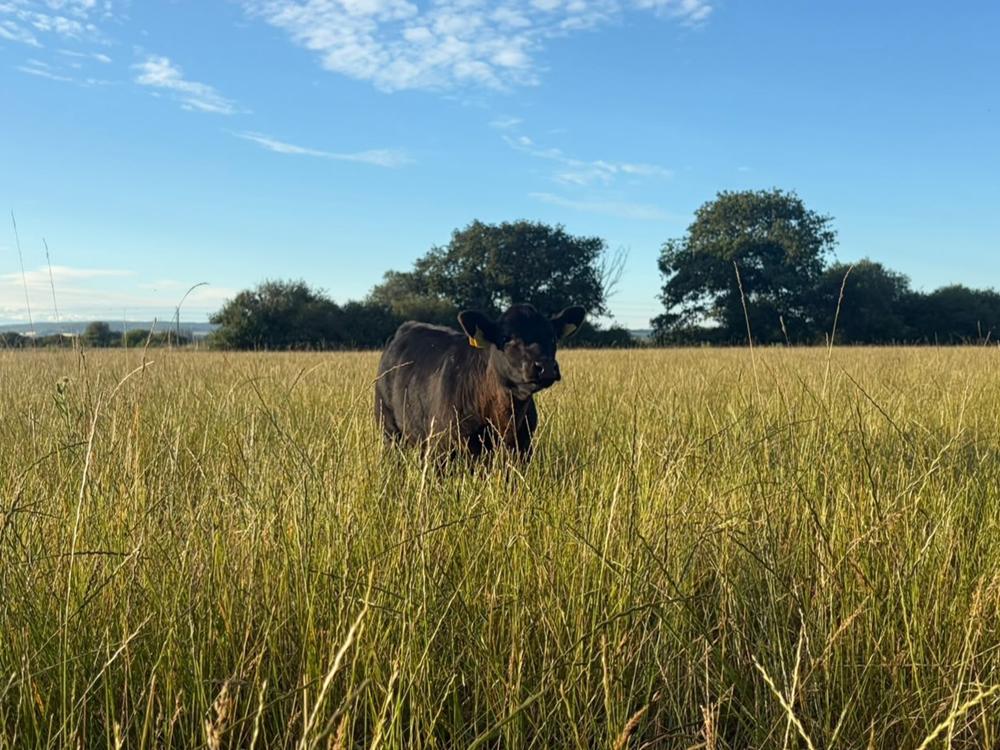
Continuous record high temperatures and almost non-existent rainfall this spring and summer have produced numerous worrying challenges on the farm.
Navigating a Scorching Spring and Summer
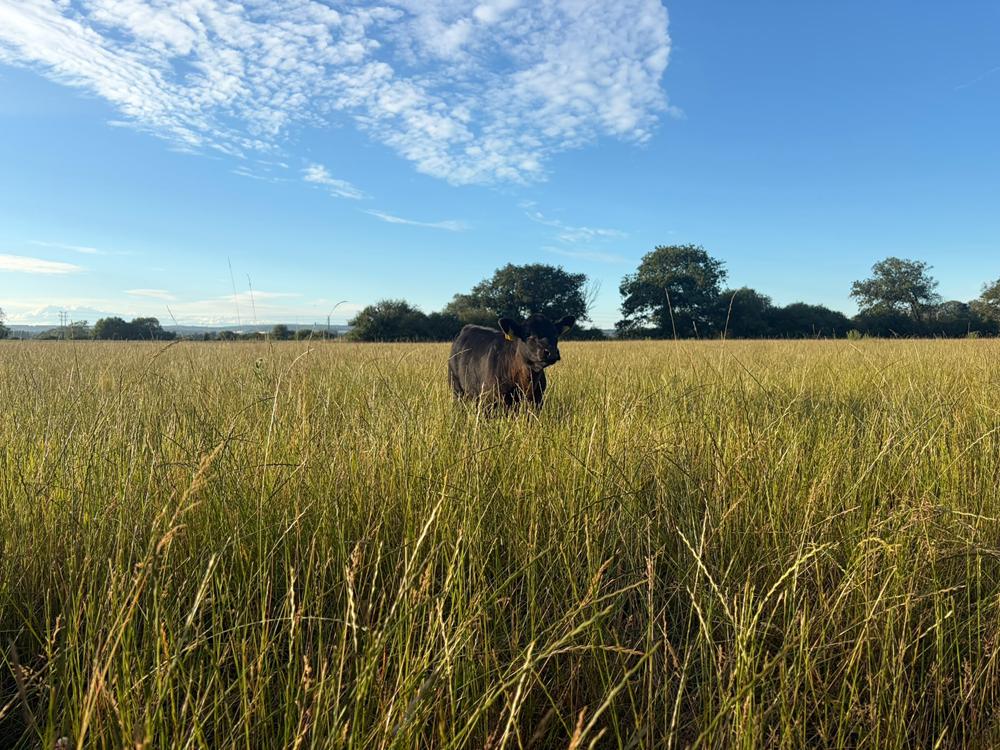
All life has struggled and will continue to struggle. There is no fresh grass for the cows, and many young trees are starting to die. The hens have suffered in the heat and this has inevitably led to a loss in egg production, and also a reduction in the average size of eggs they are laying.
The hens just lose their appetite and so simply cannot maintain a normal laying cycle. They also drink a lot more water (obviously) and this can mean some of the eggs, although as fresh as ever, have a slightly ‘watery’ white.
Caring for Our Livestock
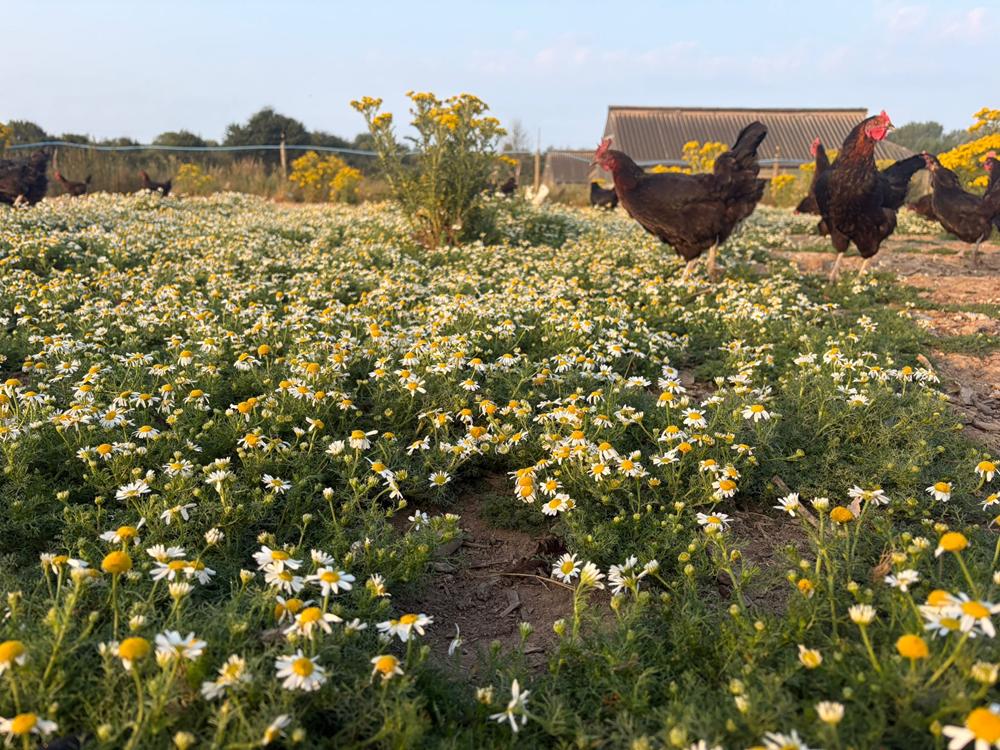
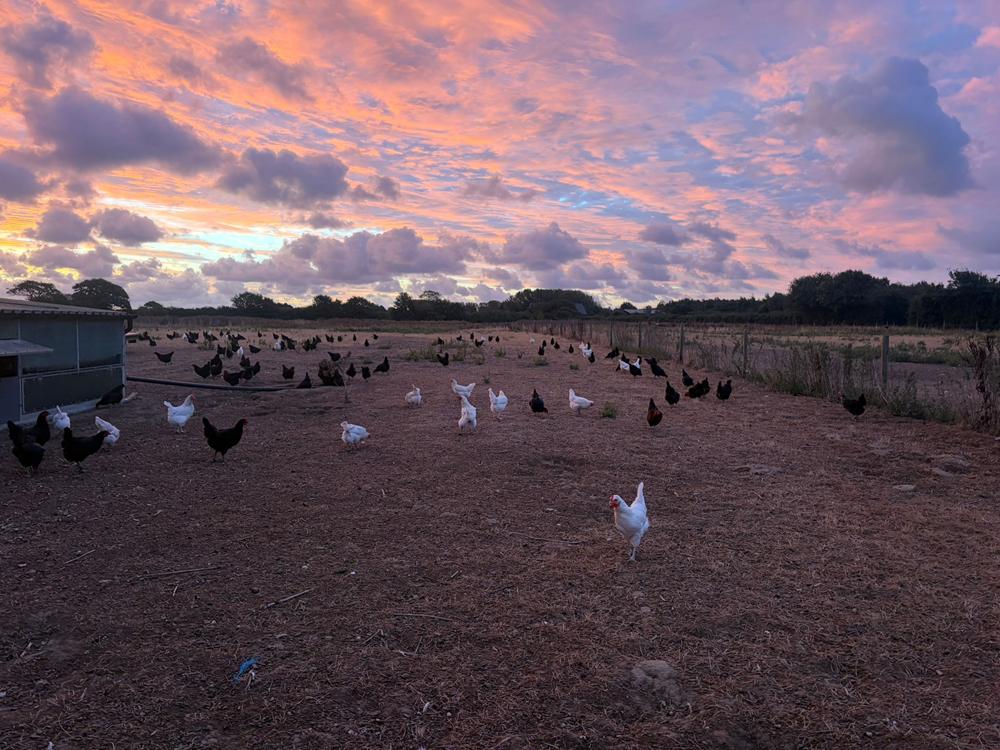
We have been opening the chicken sheds at 5am to give the birds at least a few hours of relative cool for them to range and forage. There are still plenty of plants and insects for the hens but there is nothing green left for them to feed on so they are very reliant on the feed we supply in the houses.
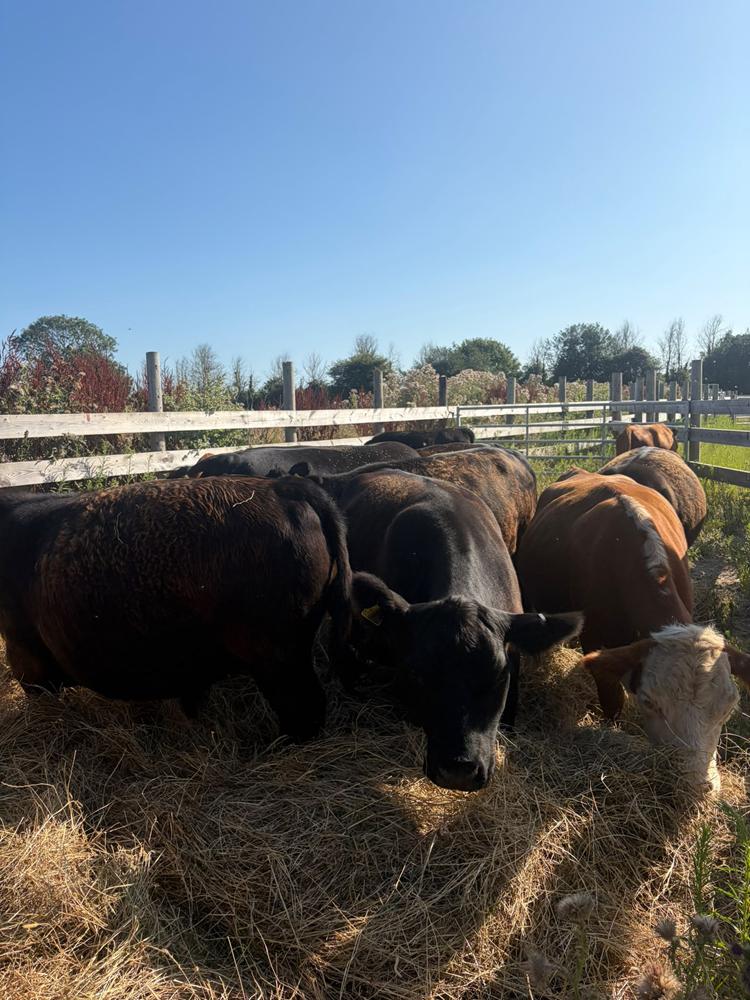
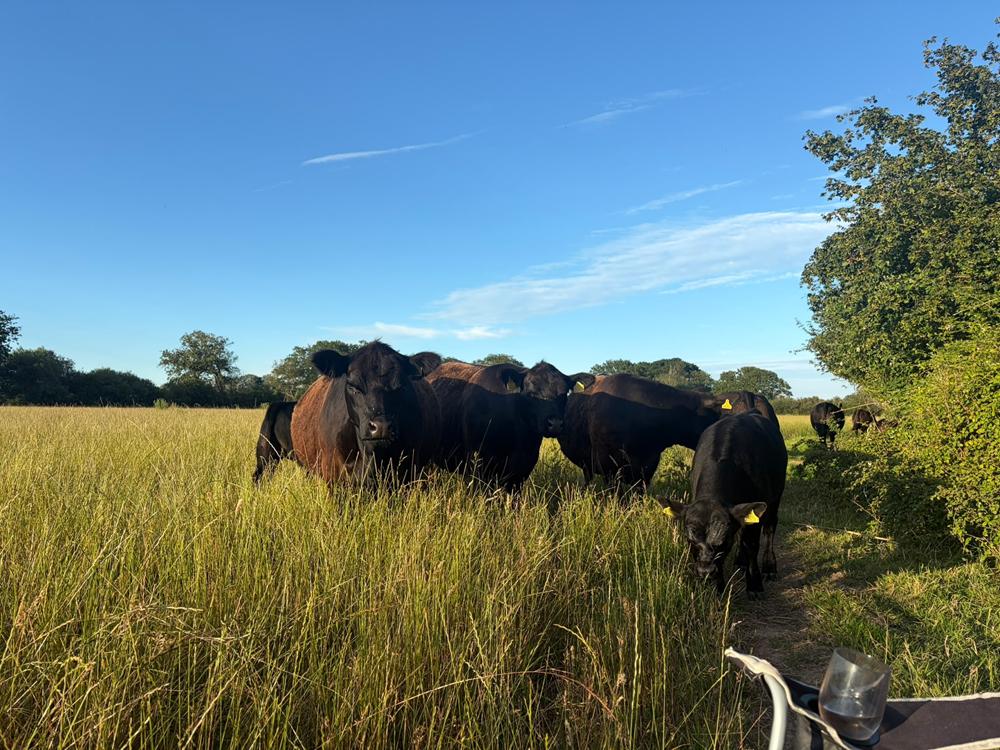
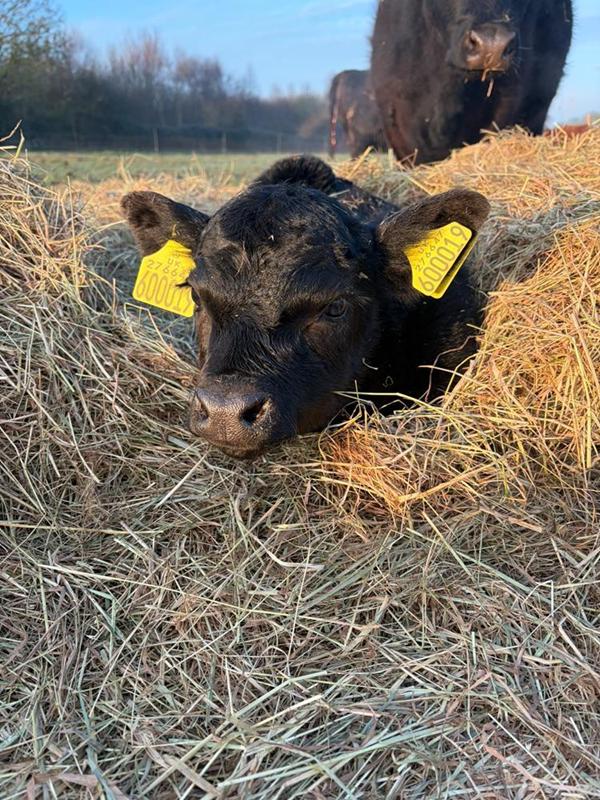
We have been feeding hay to the cows since mid July as there is no new grass for them to eat anywhere on the farm. Normally we would not need to start feeding hay until November or even December. We did have a reasonable hay crop but we will not have enough to get the herd through the winter unless it rains soon.
Bright Spots: Calves, Bees, and Farm Produce
On a brighter note, this year’s calving went smoothly, resulting in six healthy calves; four boys and two girls. The small breeds we have are well suited to be able to cope with sparse vegetation and have kept very good condition, and the youngsters have flourished despite the lack of grass. We firmly believe our policy of keeping these ‘small’ breed cows is the right one for a future of increasing climate volatility.Kept and stocked in the right way, they benefit the environment.


The bees have also done well and have produced large amounts of honey. Touch wood, they seem to be flourishing. The season though is proving to be short in terms of flowering plants due to the drought. Therefore it seems prudent to leave the hives full of honey from now on to make sure they have enough to take them through the winter.
Despite these unprecedented challenges, we remain deeply committed to working alongside nature to keep our animals healthy and our land resilient. If you would like to support the farm during this tough season, our delicious seasonal honey is available now while stocks last, and you can always buy fresh eggs directly from us right here at the farm. Thank you as always for supporting Rookery Farm.